
Learning Story – Trapping and Snaring
The Week of November 21th, 2025
What Happened?
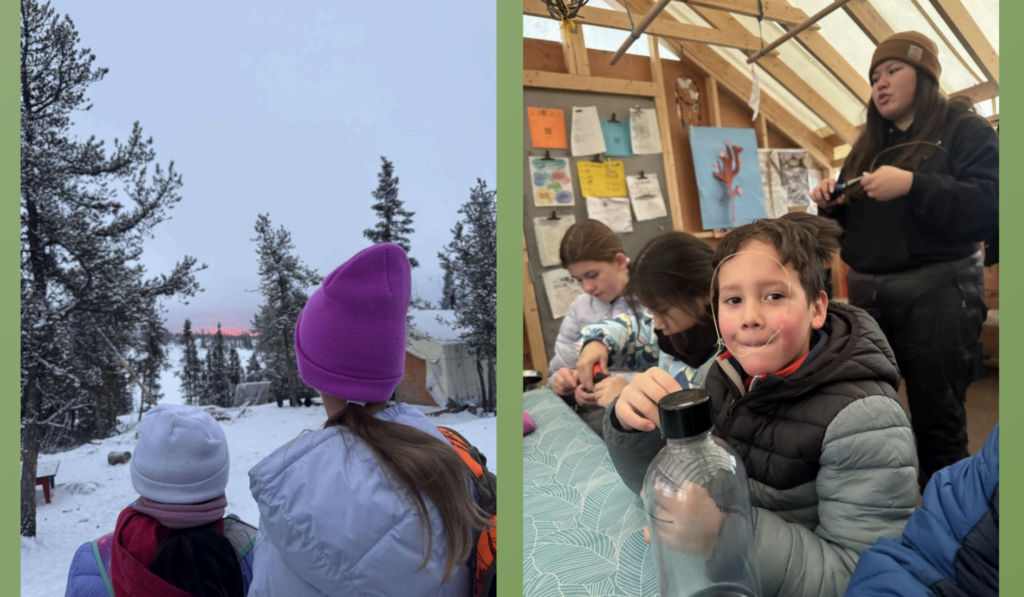
We invited Donovan Boucher to Bushkids for a land-based learning opportunity, where he shared his knowledge about trapping and snaring in the North. We gathered around the fire, curious about the items in his hands—a small wooden box, a metal design, and a stick. Donovan explained that these were tools designed for trapping. He demonstrated how each one worked and invited the Bushkids to place the stick in the trap to see it in action. We talked about a conibear trap, soft catch, snare, swing snare and demonstrated that these are set on land.
After the demonstration, the Bushkids had the chance to make their own snares. Together, we walked along a trail to learn how snares are properly set on the land. The children worked hard chopping small trees and setting up their own snares with guidance by Bushkids staff – Donovan, Chą and Taylor. It was a hands-on, meaningful experience for Bushkids to develop a relationship with the land practicing Indigenous teachings for their own learning.
Why is it Important?
Bushkids build knowledge, form deep connections and relationships with land, it’s important to their development because it benefits and supports their identify. By creating on the land opportunities such as trapping and snaring, they learn through respectful traditional practices, Indigenous teachings and Dene way of life. We continue to support Bushkids on the Land, the Land supports their confidence, pride and their identity.
Dene Kede Curriculum: pg. 132-136
“It does not take one day or one trip on the trapline to learn everything about it, but the knowledge is accumulated down through the years.” – John Tetso
Trapping has always been a way of life for the Dene. Trapping can be a means of earning orn supplementing an income in the North. There are Dene who have trapping skills and knowledge which can be passed down onto students so they can take advantage of this kind of living if they wish to or have to in the future.
- Know that the Dene respect the animals which they trap. Out of respect, they traditionally trapped only what they needed.
- Know how to trap
- Know who in the community are trappers and learn from them.
What’s Next?
- Bringing another guest to Bushkids to talk about their beliefs around trapping
- Storytelling of “Starvation” by George Blondin.
- Learning how to say some trapping phrases in Tłı̨chǫ
BushKids Quotes
“Can we actually set a trap?”
“I know how a wolverine gets out of a trap, it cuts it’s paw”
“Do people forget where they put their traps?”
“What’s a drown set?”